How to Pass the Harmony Rite
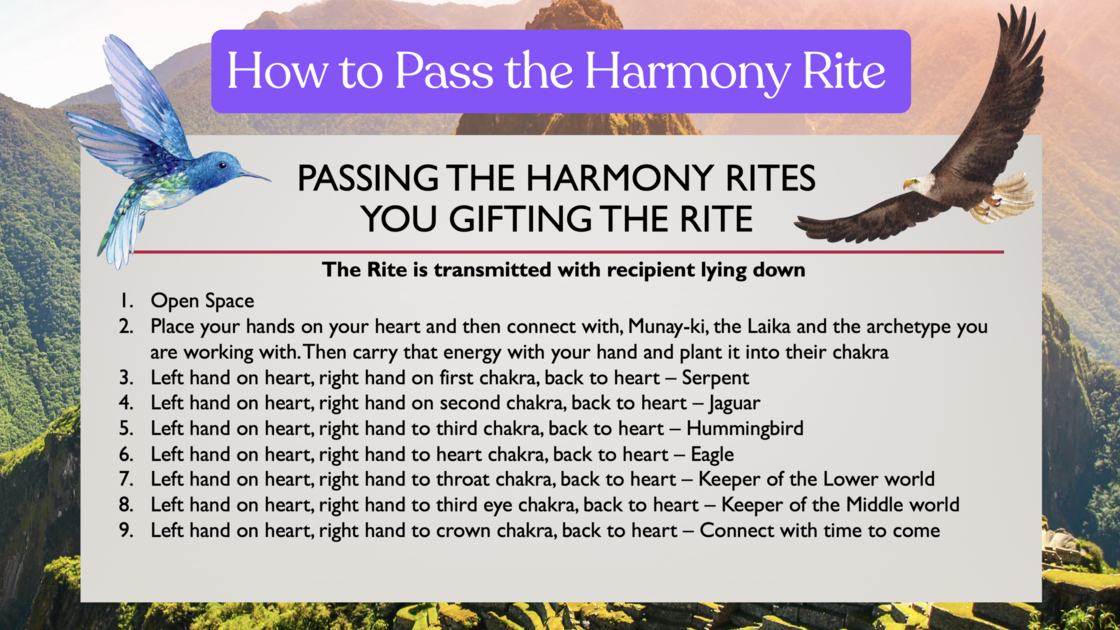
After receiving the Munay-Ki rites (all 9), individuals are empowered with a profound set of spiritual transmissions. However, they are only permitted to pass on the first three rites (the Healer's Rite, Bands of Power, and Harmony Rite) unless they undergo extensive training—typically a course of 220 hours or more. This limitation is put in place for several critical reasons, ensuring that the integrity, safety, and depth of these rites are honored and maintained.
Why Full Training is Essential for Passing All Munay-Ki Rites
Spiritual Depth and Understanding: The Munay-Ki rites hold immense spiritual energy and transformational potential. While receiving them can offer healing and growth, passing them to others requires an even deeper understanding of their nature, purpose, and energy dynamics. A comprehensive training allows practitioners to gain this understanding, helping them engage with each rite on a profound level and connect fully to the lineage from which these rites originate.
Energy Management and Protection: The higher Munay-Ki rites, which follow the Harmony Rite, involve working with complex energies that can affect both the giver and receiver’s physical, emotional, and spiritual well-being. Without sufficient experience and training, there’s a risk of improperly channeling or balancing these energies, which can lead to unintended effects or energetic imbalances. Training equips practitioners with the skills to manage these energies responsibly and protect themselves and their recipients.
Sacred Responsibility and Integrity of Lineage: The Munay-Ki rites are passed down from the ancient Q'ero lineage of Andean shamans, carrying thousands of years of spiritual wisdom and cultural heritage. Full training ensures practitioners understand this sacred responsibility, honoring the rites’ origins and intentions. Passing these rites without full training may lead to a diluted or misunderstood transmission, undermining the lineage's depth and effectiveness. Training helps practitioners maintain the rites' purity, carrying forward the teachings as intended by the original lineage.
Ethics and Readiness in Shamanic Practice: Receiving the rites is a personal journey, but passing them to others is a journey of service, care, and ethical responsibility. Practitioners must be emotionally and spiritually mature, ready to support others in their transformations. The extensive training often includes teachings on shamanic ethics, self-care, and the preparation needed to guide recipients through potentially intense spiritual processes. This guidance is crucial for the recipient’s safe and transformative experience.
Importance of Limiting Teaching of how to pass furture Rites
- Limits Access to Advanced Energies: The higher Munay-Ki rites involve more intense spiritual work, which can bring up unresolved shadow aspects, deep past-life traumas, or ancestral wounds. The Harmony Rite, on the other hand, focuses on creating balance, which is necessary to avoid overwhelming the recipient with energies they may not yet be ready to process.
- Maintains the Integrity of the Rites’ Structure: By limiting access to more advanced rites passings, practitioners ensure the Munay-Ki’s teaching structure is preserved, maintaining a logical, progressive path for spiritual development. Each rite builds upon the previous ones, allowing recipients to evolve steadily and safely in their spiritual journey. Only those who have received full training are authorized to guide recipients through the complete sequence of rites, providing a safer, more cohesive experience.
 Please log in or register to post a comment
___MESSAGE___
___MESSAGE___